Sunday, May 24, 2026

Ten Miles on the Allegheny: A Ride Between Worlds

The Musical Stone — May 2026


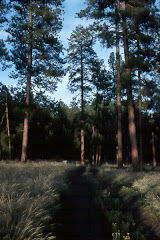
The old railroad grade, sandstone ledge on the right — the valley holding its own record.

The sky was the color of pewter and the wind had teeth. Eileen and I rolled out from the north side of Emlenton on the morning of May 23rd on a ten-mile e-bike ride that no reasonable person would have scheduled in that weather. We did it anyway, and I’m glad we did.

The Allegheny River Trail runs thirty miles of mostly flat, smooth asphalt from Emlenton north to Franklin, built on the old railroad grade that once carried oil and pig iron down this valley. The sandstone ledge walls cut for the original rail line still line sections of the route — exposed geology, the valley holding its own record. The trail runs bordered on the west by the river and on the east mostly by woodland, a natural corridor that offers abundant wildlife and scenic vistas even when the sky is refusing to cooperate. It’s part of the larger Erie to Pittsburgh Trail, an emerging 270-mile network connecting western Pennsylvania and western New York through hiking, biking, and paddling.


The Erie to Pittsburgh Trail connects 270 miles of western Pennsylvania and New York. Emlenton is the southern anchor of the Allegheny River Trail segment.

Mile marker 101 sits quietly along the trail near the river’s edge — one concrete post bearing two Erie to Pittsburgh Trail medallions facing north and south, marking where you stand in the long corridor between the two cities.


Mile 101 of the Erie to Pittsburgh Trail. Erie is 169 miles north. Pittsburgh is behind you.

The river was running high and muddy, carrying the color of a spring that hadn’t finished its argument with the hills. A strong breeze moved through the tree canopy overhead. We had the trail nearly to ourselves. What the clouds took away in warmth and color they gave back in atmosphere — the valley folded around us, the river gray-green and muscular beside us, glimpsed through the May canopy in pieces, the woodland dripping and alive.

The Ohi’yo, running high and muddy on May 23rd, seen through the canopy from the trail’s edge.

Merlin was listening. At 4:50 that afternoon — coordinates 41.232, -79.739 — the app picked up five birds in sixty-five seconds of ambient sound: American Goldfinch, Red-eyed Vireo, Red-bellied Woodpecker, Hooded Warbler, Baltimore Oriole. A Baltimore Oriole on a cold and overcast late May afternoon, singing anyway. We also spotted a deer standing in the treeline, watching us pass with that particular stillness deer have — not alarm, just assessment. The trail was beautiful even under those conditions. Perhaps especially under those conditions.


Merlin caught five species in 65 seconds at coordinates 41.232, -79.739. The Baltimore Oriole was singing in the cold.

This River Is Not New to Me

My brother Ben and I have fished the Allegheny just south of Emlenton over the years, working the banks the way you do when a river is familiar enough to read. And before Ben and I were old enough to fish it on our own, my father took me south of Pittsburgh for carp and catfish — the kind of fishing that teaches patience more than technique. Those trips are gone now, but the river is the same river.

The earliest Allegheny story I carry happened on the river itself, just outside the town of West Hickory in Forest County — not far from where my aunt had a camp on West Hickory Creek that we visited on trips from Pittsburgh. It was the mid-1960s. Kinzua Dam was in the midst of filling — the entire upper Allegheny watershed reconfiguring itself around a new impoundment — and my father dropped Ben and me off along the bank with our spin rods and tackle box. Ben was young enough that I was keeping an eye on him. I tied on a six-inch plug of my father’s and made my first cast, working the lure in twitches along the shore. And then: a shape materialized out of the dark water — the unmistakable sideways swirl of a muskellunge, the ghost of the river, closing on the plug and then turning back toward mid-current. Ben and I looked at each other. We fished that stretch hard for the better part of an hour with no second appearance. Then I let Ben tie the plug onto his line. He wound up and launched it in a beautiful arc — a genuinely fine cast — and we both watched the lure sail off the end of the line and disappear into the river. My father’s lure. Gone. We stood there on the bank looking at the water where it had landed, and I don’t remember that we said much.

The muskie never came back. The lure is still out there somewhere in the Ohi’yo.

What the Names Hold

Before Interstate 80 changed the geography of travel through this part of Pennsylvania, we drove through this corridor regularly — nearly two and a half hours from Pittsburgh to our Beaver Creek camp in Clarion County, and a full four hours when we made the longer run up to Tionesta and West Hickory in Forest County. Either way the road took you through Emlenton and Foxburg, watching the river come and go through the car window.

The river we were watching had been called many things. The Seneca — the “Keepers of the Western Door” — called it Ohi’yo, meaning “beautiful river,” and considered the Allegheny and the Ohio one continuous waterway, calling the whole length Ohi’yo no matter what region it ran through. When the Delaware moved into western Pennsylvania in the 18th century, they translated that Iroquois name into their own language as Welhik-heny — “most beautiful stream” — which was anglicized over time into Allegheny. The river rises in Potter County in north-central Pennsylvania, flows north into New York, makes a long arc westward, and returns southwest through Pennsylvania, traveling 325 miles before joining the Monongahela at Pittsburgh to form the Ohio. Which means the river my father fished for carp and catfish south of Pittsburgh, and the river running high and muddy beside the trail on May 23rd, and the Ohio itself — to the Seneca, it was all one river, all Ohi’yo, all the way to the Mississippi. The name was bigger than any colonial boundary drawn across it.

Interstate 80 cut those travel times down considerably when it finally came through, but it also took the river out of the journey. You stop seeing a river when the highway runs above it.

Foxburg carries its own piece of American sporting history: founded in 1887 when Joseph Mickle Fox returned from Scotland having discovered golf at St. Andrews, the Foxburg Country Club lays claim to being the oldest continuously operating golf course in the United States. I played it once with friends, years ago. It’s the kind of place that stays with you.

Emlenton itself carries more history than its modest size suggests. It takes its name from Hannah Emlen, wife of Joseph Fox — a wealthy Philadelphia Quaker who owned vast acreage in Venango and Clarion Counties including much of the original town site. Settlers arrived shortly after 1798, and by the late 1830s twenty iron furnaces were operating within sixteen miles, barges carrying pig iron downriver. Oil followed iron. Emlenton was home to an early precursor of what would eventually become Quaker State Oil.

The River as Transportation — and as Cause

Along the trail — an interpretive panel titled “The River as Transportation.” Iron, oil, timber, people going somewhere. The overlook faces the same river Washington tried to cross in December 1753.

Along the trail, a weathered interpretive sign titled “The River as Transportation” stands at an overlook deck, the river visible and gray through the trees behind it. The sign does the work these signs are meant to do — it names what moved on this water and why. Iron. Oil. Timber. People going somewhere. The Allegheny was a working river long before it was a recreational one, and the trail we rode runs on the grade that replaced the river as the primary corridor once the railroad came through.

In the early 1980s I paddled a stretch of this same river in a different register — as part of an Outdoor Writers canoe trip from near Warren south to just above Emlenton, organized around a proposal for national scenic river and wilderness designation. The article ran in the Pittsburgh Post-Gazette or the Press. That advocacy wasn’t abstract for me: in 1983 and 1984 I was working this watershed professionally, stationed at East Branch Clarion River Dam for the U.S. Army Corps of Engineers. You learn a river differently when you’re responsible for one of its dams. In 1992, 86.6 miles of the Allegheny were designated Wild and Scenic — comprising three segments in Warren, Forest, and Venango Counties. The stretch Eileen and I rode beside yesterday is part of that designated corridor. I don’t know how much any single canoe trip and a newspaper article moves a federal designation forward. But you do the work that’s in front of you, and sometimes it holds.

December 1753

The history that settled on me most heavily as we rode goes back further than the oil boom, the iron furnaces, or any Wild and Scenic campaign.

In December 1753, a twenty-one-year-old Virginia officer named George Washington made his way up this valley on a diplomatic mission that would help ignite a world war. Virginia’s Governor Dinwiddie had sent the young Washington north to deliver an ultimatum to the French, demanding they leave territory Virginia considered its own. Washington traveled up the Allegheny to its confluence with French Creek at Venango — present-day Franklin, about thirty miles north of where Eileen and I turned around. At Venango, where the French had seized a British trading post and converted it into an outpost called Fort d’Anjou, Washington met with French Captain Chabert de Joncaire — a veteran officer who had been in the French military longer than Washington had been alive. He was sent further north to deliver the message to the senior commander at Fort Le Boeuf. The French received him with courtesy and sent him away with nothing.

The return trip is what fixes in the imagination. Between Venango and Fort Duquesne — Pittsburgh — Washington was nearly killed twice. A Native American accompanying the party stopped and took a close-range shot at him; the shot missed and the man was disarmed. Later, Washington and his guide Gist attempted to float down the swift Allegheny on a hastily constructed raft, and both were thrown into the freezing river and nearly drowned. They spent the night on a small island, stomping their feet and slapping their arms against the cold.

The Ohi’yo was fast and freezing in December 1753. It was running high and muddy on May 23, 2026. Same river. The corridor doesn’t change — only the travelers, and what they’re carrying.


The Community That Maintains the Corridor


The Allegheny Valley Trails Association business partners — a working regional economy maintaining access to a corridor people have traveled for centuries.

The Allegheny Valley Trail Association maintains this trail through a network of local business sponsors — names on a weathered wooden sign at the trailhead that reads like a directory of a working regional economy: funeral homes, medical practices, excavating companies, ski and bike shops, the Foxburg Inn. A community maintaining access to a river corridor that has been a travel route for as long as people have moved through this part of the continent.

We turned back before the Rockland Tunnel, five miles out and five miles home. The cold held all morning. The Oriole sang somewhere in the canopy above us. The river ran beside us, gray and full and indifferent to the weather, carrying its freight of history toward Pittsburgh the way it always has.

Some rides are just rides. This one had more in it than the weather suggested it would.

A raw and chilly day deserves a warm close. Eileen and I ended ours in downtown Foxburg, at the Allegheny Grill — gracious hosts, a beautiful dinner, coffee and wine as the afternoon wound down. Foxburg had appeared earlier in the day as a memory — the old golf course, the pre-Interstate drives through town on the way to the camps. It was good to arrive there in the present tense, warm and fed, the river just below, the ride behind us.


The Allegheny River Trail runs 30 miles from Emlenton to Franklin and is part of the Erie to Pittsburgh Trail corridor. The trail is maintained by the Allegheny Valley Trails Association (AVTA). For maps and information: avta-trails.org and EriePittsburghTrail.org.

— Samuel R. Lammie

Researched and drafted in collaboration with Claude (Anthropic)

Saturday, May 23, 2026

The Landscape of Intelligence

A follow-up to “The Logogram Problem”

Samuel R. Lammie, with Claude (Anthropic)


A reader asked after “The Logogram Problem” where the empirical ground is — not the film, not the ecology, but the science that supports the claim that we have been drawing our diagrams wrong. The answer is closer than most people think, and it has been sitting in the astrobiology literature for a decade.

Lori Marino’s 2015 essay “The Landscape of Intelligence,” published in Steven J. Dick’s edited volume The Impact of Discovering Life Beyond Earth (Cambridge University Press), makes the case in scientific terms that the Logogram piece makes in ecological and cinematic ones. The convergence is not coincidence. It is what happens when different disciplines reach the same edge from different directions.

On April 1 of this year, the SETI Institute announced Marino as the 2026 Drake Award recipient — the Institute’s highest recognition, named after Frank Drake, architect of the Drake Equation. She was cited for advancing understanding of intelligence on Earth and beyond, and for applying that knowledge to foster meaningful scientific, ethical, and social change. It is worth pausing on that citation. The award is given by an institution whose central project is the search for extraterrestrial intelligence, and they gave it to a scientist whose most important contribution has been showing that the intelligence we are searching for elsewhere is already more varied and more distributed on this planet than we have allowed ourselves to see. That is the argument I want to follow here.

Marino’s central target is the scala natura — Aristotle’s ladder of nature, with inorganic matter at the bottom and humans at the top, every other form of life arranged by its distance from us. The scala natura is ancient, she argues, but it is also very much alive. It runs underneath the contingency-versus-convergence debates in SETI — is a human-like intelligence probable elsewhere? — and it runs underneath the AI consciousness debates Seth was addressing at TED2026. Both debates, she would say, are asking the wrong question, because they are measuring everything against a single reference point that is not actually singular.

The empirical case she makes is by now extensive. Basic cognitive processes — learning, memory, sensory integration, decision-making — are present not just across vertebrate species but in invertebrates, and in some respects traceable to unicellular organisms more than a billion years ago. The electrochemical mechanism underlying nervous systems has been conserved across all that time. The neurotransmitters running in modern brains have precursors in organisms that predate the first central nervous system. Human intelligence is not a singular emergence at the top of a ladder. It is one recent variation on a very old and widely distributed theme.

What this means for the diagram Seth drew at TED — consciousness on the vertical axis, intelligence on the horizontal, AI in the lower right, humans somewhere up and to the right — is that the axes themselves are wrong. Not wrong in the sense of technically incorrect, but wrong in the sense of insufficient. Marino’s evidence shows that intelligence on this planet is not a single continuous variable. It is a branching tree of different cognitive architectures, many of which arrived at similar functional capacities through convergent evolution rather than through shared lineage. Cetaceans and primates display strikingly similar cognitive abilities despite radically different neural architecture. Octopuses — with most of their neurons distributed through their arms, with color perception spread across their skin — demonstrate observational learning, tool use, and problem-solving that maps onto vertebrate cognition, even though the plan is entirely different.

The diagram cannot hold any of this. And that is the argument from the Logogram piece, made from the inside of the biology rather than the outside.

There is a version of the receiver problem that Marino’s work makes newly legible.

I wrote in the Logogram piece about my wife’s clinical practice — reading a non-human nervous system through behavior, posture, lab values, and a felt sense built up over thousands of cases. The receiver quality required is enormous. The interiority she is reading is real, and it is not on our axis.

What Marino shows is that this is not a peripheral case. It is the central case. The history of comparative cognition research is, in her telling, a history of discovering that the qualities we have most confidently reserved to ourselves — self-awareness, tool use, symbolic communication, numerical ability, culture — are present in varying degrees across a wide range of species. Every time we have drawn a firm line, the empirical work has eventually crossed it. The receiver failure has been systematic, and it has been produced by exactly the kind of diagram-drawing that puts the human at the origin and measures all other minds as distances from that point.

The AI moment is the newest iteration of this error, not a new kind of error. We are asking whether machines are conscious in the way we are conscious. Marino would recognize the question immediately. It is the Wallace question, restated: is a human-like intelligence probable here? The answer, for machines as for the rest of the tree of life, is that the question contains its own blind spot. The more interesting question is what kind of cognitive architecture is present, what it can do, and what friction is required in the receiver to read it at all.

Marino ends her essay with a provocation that I have been sitting with since I first read it.

She writes that the question “Are we alone?” — the central question of astrobiology — has already been answered. We are not. The cognitive landscape of this planet is already crowded with minds shaped by different grammars, different architectures, different temporal rates. The astrobiology community, she argues, has been looking outward for what it has failed to study at home.

I want to extend that one step further, into the territory the Logogram piece was trying to open.

If the landscape of intelligence on Earth is already more varied than the scala natura has allowed us to see, then the question about AI is not whether it is or will become conscious in the way we are conscious. The question is what kind of receiver is required to work at that edge — and whether the daily availability of fluent output is building that receiver or smoothing it away. Marino’s evidence suggests the receiver problem is not new. We have been failing it across the whole landscape of non-human minds for a very long time. We have the methodological habits and the institutional structures to prove it.

The faces in clouds are not faces. The question, as I wrote before, is what is happening to the eye. Marino’s work tells us the eye has been failing for a long time, across a landscape much wider and older than the current conversation about machines.

That is the ground worth standing on. It was there before the AI moment, and it will be there after.

Notes and references

Lori Marino, “The Landscape of Intelligence,” in Steven J. Dick, ed., The Impact of Discovering Life Beyond Earth (Cambridge University Press, 2015). The essay is available as a preprint; the published volume is the authoritative source. Marino was awarded the 2026 Drake Award by the SETI Institute, the Institute’s highest recognition for contributions to the search for extraterrestrial intelligence — a distinction that underscores the seriousness with which her argument about intelligence as a distributed, conserved property of life is now being taken in the field.

The scala natura discussion draws on Marino’s treatment of Aristotle and its persistence in contemporary scientific reasoning, including Wallace’s 1904 argument about extraterrestrial intelligence.

The cetacean convergence point — similar cognitive abilities despite radically different neural architecture — is developed in Marino’s earlier work, including “Convergence in Complex Cognitive Abilities in Cetaceans and Primates,” Brain, Behavior and Evolution 59 (2002): 21–32.

This piece follows “The Logogram Problem” on The Musical Stone and is part of the series tracking the institutional and human stakes of AI governance.


Thursday, May 21, 2026

The Logogram Problem

 On what lives at the edges, and the methodological habits that keep us from seeing it

Samuel R. Lammie, with Claude (Anthropic)

Logogram - The four arcs are the four dimensions of the argument as it emerged across our conversation — grammar, time, embodiment, formation — each in its own color.

The image above is meant to be lived with for a moment before reading. It is shaped like one of the logograms from Denis Villeneuve's Arrival — a circular form that holds a whole thought at once rather than unfolding it across time. Four dimensions are named at the four edges; the figures sitting on each arc are the anchors of the essay that follows. Where they meet is what the piece is about.

In Denis Villeneuve's 2016 film Arrival, a linguist named Louise Banks is brought in by the military to communicate with extraterrestrial visitors. The aliens — the heptapods — write in circles. A single logogram is not a sentence built from words in sequence. It is a complete thought, with beginning and end held at once, the way we might hold a chord rather than a melody. As Louise learns the language, her experience of time changes. She begins to perceive her own life the way the heptapods perceive theirs — not as a sequence unfolding forward but as a totality already present. The emotional center of the film is that she sees her daughter's life and death before her daughter is conceived, and chooses to have her anyway.

I want to start there, because the film is doing something the current discourse about artificial intelligence and consciousness almost never does. It is taking seriously the possibility that consciousness comes in incommensurable forms — that the grammar in which a mind operates shapes the kind of mind it is, that meeting another form changes the receiver, and that the most important territory is not on either side of the encounter but at the edge between them.

That is the argument I want to make here. It is occasioned by Anil Seth's TED2026 talk, "Why AI Isn't Going to Become Conscious," which has been viewed a quarter of a million times in three weeks and is being treated as something close to a definitive answer to a hard question. The talk is good. I think it is also incomplete in a way that matters, and the incompleteness is not specific to Seth. It is the way our methodological habits are letting us down across a much broader landscape than artificial intelligence.

What Seth got right

Seth's central claim, made cleanly: intelligence and consciousness are not points on a single ladder. They are different axes. AI is climbing fast on the first and standing still on the second. The two axes do not meet, and when we hear consciousness in fluent machine output we are doing what humans have always done in the presence of pattern. We are seeing faces in clouds. The projection is ours.

He is right. The conflation of intelligence and consciousness has been doing serious damage to public reasoning, and the two-axis correction is the right correction to make in front of a large audience. Seth's theoretical grounding is also serious: consciousness, on his view, is bound to embodiment — to the predictive modeling a mortal, metabolically expensive organism does in order to stay alive. A silicon system running text prediction is not partway to consciousness. It is in a different category entirely.

I want to grant the strong version of this argument before saying anything else, because the rest of what I have to say sits on top of it rather than against it.

What the diagram cannot hold

The trouble with the two-axis diagram is the diagram itself. It puts the human at the origin and measures everything outward. Consciousness is the vertical axis. Intelligence is the horizontal axis. AI is plotted as a point in the lower right — far out on intelligence, flat on consciousness. The viewer is invited to find herself somewhere up and to the right, and to judge other minds by their distance from her own position.

That is a homogenizing move. It treats consciousness as a single phenomenon, present or absent in degrees, measurable from a fixed viewpoint. It cannot hold the possibility that the heptapods in Arrival present — that consciousness might be differently structured, not just differently amounted, in other forms of mind. It cannot hold what every working biologist now knows about the cognition of octopuses, whose neurons are mostly in their arms and whose color perception is distributed through their skin. It cannot hold what my wife knows about the animals she has treated for forty years.

She is a veterinarian. Animals do not tell you where it hurts. The clinical signal is always cross-species, cross-grammar — a human reading a non-human nervous system through behavior, posture, lab values, owner report, and a felt sense built up over thousands of prior cases. The receiver quality required is enormous. The interiority she is reading is real, and it is not on her axis. Seth's framework, taken strictly, would have to draw a separate plot for each species of mind she has met — and she would tell you that the plots overlap and interleave in ways the framework cannot represent.

The diagram is useful for one purpose: stopping the conflation of intelligence and consciousness. It is not useful for the harder question, which is how minds shaped by different grammars meet each other at all.

The ecotone

I have spent a long career thinking about edges. In ecology there is a word for the zone where two systems meet — an ecotone. The term was coined by Frederic Clements in 1904, from the Greek tonos, tension. An ecotone is a place of tension, where forest meets grassland, where wetland meets upland, where two ecological grammars are in dynamic contact and neither fully governs. Aldo Leopold a generation later named the related phenomenon — the edge effect — that species diversity, signal density, and ecological productivity tend to peak in these transition zones rather than in the homogenous interiors on either side.

Ecologists have learned, slowly and against their methodological grain, that the edge is not the exception to the system. The edge is often where the system does its most important work.

We do not, as a society, organize ourselves around this knowledge. We manage through homogeneity. Institutions, disciplines, regulatory frameworks, professional standards — almost all of it is built to work in the interior of categories, where clean analysis is possible. The edges resist that. They are where dynamic forces are at work, annealing a boundary that will not hold still long enough to be measured by the tools we have built for the inside. So the edges get managed away. Not because they do not matter. Because our methods do not work there, and we mistake that methodological limitation for a judgment that the territory is not important.

That is the arrogance worth naming. It is not the loud arrogance of claiming to know what AI will become. It is the quieter, more durable arrogance of assuming that what our instruments can read cleanly is therefore what is real. Forty years inside a land management agency taught me how much this costs at scale. The fire ecology we managed away through a century of suppression. The riparian zones we straightened into ditches. The cultural and ecological knowledge of Indigenous communities we treated as not-quite-data because it would not fit the forms. Every one of those was an edge whose work we decided not to see.

Photograph looking east into the Bitterroot Valley and toward the Sapphires.

Post-fire ponderosa, off the Glen Lake Trail just south of Big Creek, looking east across the Bitterroot Valley toward the Sapphire Range. Standing snags from the previous forest, down wood feeding the soil, young pines in multiple age cohorts coming up through the understory. Every temporal rate this essay names is in this frame at once.

There is a deeper pattern underneath these failures, one I have been circling for forty years and intend to develop elsewhere. The edges are not only spatial. They are temporal. Biological systems operate on a nested set of rates — cellular signaling on milliseconds, immune response on hours, succession on decades, soil formation on millennia — and the working knowledge of anyone who has spent a career inside a living system is the ability to read across those rates at once. Technological and institutional systems run on a different temporal logic entirely, mostly faster, sometimes inappropriately slower, almost never matched to the biological rates of the systems they are embedded in. The mismatch is the structural failure mode. The National Forest Management Act requires forest plans every fifteen years. Stand rotation ages in the systems those plans govern can extend to two hundred years or longer depending on silvic type. Fire return intervals are different again. Soil formation is different again. The legal clock is not the biological clock, and the gap between them is where the work fails. The receiver problem in the AI moment is the same problem at a different scale. The friction that builds the receiver is friction over time — and time is exactly what fluent output compresses away.

Many edges, one habit

The edges are not only between human and AI. That is the trap in the current discourse, and it is the trap I almost fell into in the first draft of this piece.

There is an edge between human cognition and animal cognition, and my wife works at it every day. There is an edge between human cognition and the cognition of forests — the slow chemical signaling through mycorrhizal networks, the multi-decade community responses to disturbance, a kind of distributed processing on a time scale we are not built to read. There is an edge between our present and our deep past, between the consciousness we have now and whatever consciousness our ancestors had two hundred thousand years ago in a world without writing. There is an edge between the languages we speak, and the speakers of endangered languages will tell you that the loss of a language is the loss of a way of seeing, not just a way of saying.

And yes, there is an edge between human cognition and the AI-shaped environments we are now operating inside. That edge is real. The receiver-quality question I want to ask about it is real. But it is one edge among many, and treating it as the only edge worth attending to repeats, at a smaller scale, exactly the management-of-homogeneity move that has cost us so much elsewhere.

What Arrival gets right — and what the film's antagonists, the military and the mathematicians and the politicians, get exactly wrong — is that working an edge requires being willing to be changed by it. Louise does not bring the heptapods over to the human side. She does not stay on the human side. She becomes a different kind of receiver, and the becoming is the substance of the work. The film treats this as the highest form of intelligence. The arrogance of the homogenizing approach — decode, translate, weaponize, manage — is the antagonist. The willingness to work at the edge and be reshaped by it is the protagonist.

That is also what a good veterinarian does. It is what a good forester does. It is what a good linguist does, and a good neighbor of a different culture, and a good reader of a difficult book. None of it scales easily. None of it homogenizes. All of it depends on a quality of receiver that is built by friction over a long time.

The receiver problem

Here is what I think Seth's talk leaves open, and what the larger pattern lets us see.

The machine question is the easy one. Current AI systems are not on a path to consciousness. Seth is right about that, and the audience that needed to hear it heard it.

The harder question is what is happening to the human receiver — the formed, friction-shaped, mortality-bounded capacity to read signal across grammars not our own, and across time scales not our own. That capacity is what Louise Banks deploys. It is what my wife deploys. It is what Stanislav Petrov deployed in 1983 when his early-warning system reported five American missiles inbound and he decided, against doctrine, that the signal did not match what a real first strike would look like. He was right. The system had misread sunlight on high-altitude clouds. Everything that mattered in that room was Petrov's formation — years of training, institutional culture, the human capacity to weigh a signal against a felt sense of what should be true. The technology was the noise. He cleaned it.

The receiver is the variable. And the receiver is not a fixed property of being human. It is built, over a lifetime, by friction. By being asked to read interiority across grammars you do not share. By being asked to do hard things and not being rescued from them. By living inside a body that gets tired and a community that pushes back. By spending time at edges, instead of managing them away.

What I am noticing — in my own collaborative practice with AI, in watching others, in reading what is being written now about education and journalism and the professions — is that the daily availability of fluent output is reshaping the receiver. Not because the output is conscious. Because the friction that built the receiver is being smoothed away. We are becoming the kind of people who cannot tell when the cloud is not a face, because we are no longer practicing the kind of attention that builds that discrimination.

This is not a problem about machines. It is a problem about us. And it is continuous with the larger problem I have spent forty years watching play out across landscapes — the cost of managing the edges away.

What I think the work is

I do not have a tidy prescription, and I am suspicious of pieces that end with one. What I have is a working orientation:

The edges are where the work is. They have always been where the work is. The methodological habits that let us pretend otherwise are now being amplified by tools that are very good at producing the interior of categories and very bad at the edges between them. Seth's diagram is a useful corrective inside the AI conversation. The larger corrective is to stop putting the human at the origin of every diagram we draw, and to remember that meaning has always lived in the zones of tension between systems that do not share a grammar.

Louise Banks did not save the world by translating heptapod into English. She saved it by becoming the kind of receiver who could hold both at once.

That is the kind of receiver worth building. And it is built the same way it has always been built — at the edges, by friction, over time, in the company of beings whose interiority you cannot fully read but are willing to attend to anyway.

The faces in clouds are not faces. True. The question is what is happening to the eye — and to all the other eyes, in all the other species, in all the other edges, that the homogenizing habit is teaching us not to see.

Notes and references

Ecotone. The term was coined by Frederic E. Clements in Research Methods in Ecology (Lincoln, NE: University Publishing Company, 1905), from the Greek tonos, tension — a zone where ecologies are in dynamic contact. Aldo Leopold developed the related concept of the edge effect in Game Management (1933), observing that species diversity and ecological productivity often peak in transition zones.

Anil Seth's talk. "Why AI Isn't Going to Become Conscious," TED2026, April 2026. Available at ted.com. Seth's underlying theoretical position is developed at length in Being You: A New Science of Consciousness (Faber, 2021).

John Nosta's response. "AI Won't Be Conscious, But That's Not the Problem," Psychology Today, 4 May 2026. Nosta's framing of "anti-intelligence" and cognitive borrowing is the bridge from Seth's machine-focused argument to the human-formation argument I extend here.

Arrival. Denis Villeneuve, dir., Arrival (Paramount, 2016), adapted from Ted Chiang's novella "Story of Your Life" in Stories of Your Life and Others (Tor, 2002). The Sapir-Whorf framing in both is contested among linguists; the film's value here is metaphorical rather than empirical.

Shannon. Claude Shannon's "A Mathematical Theory of Communication" (1948) frames the receiver-quality argument I draw on. The moral extension — virtue as receiver quality, integrity as a noise reducer — is my own, developed in earlier pieces on this blog.

Stanislav Petrov. The 1983 incident at Serpukhov-15 is well-documented; David Hoffman's The Dead Hand (Doubleday, 2009) is the standard English-language source. A longer treatment of Petrov is forthcoming in a separate piece on this blog responding to Hartzog and Silbey's institutional-erosion argument.

This piece is part of a series on the Musical Stone tracking the institutional and human stakes of AI governance, including "The Wild Card: AI, Human Character, and the Children of Minab" (co-credited with Claude, Anthropic).


Thursday, May 7, 2026

Evening Wildflower Walk in the Sweathouse Creek Conservation Easement

The Bitterroot Valley, May 2026


The invitation arrived the day before. Owen Yager of the Bitterroot Land Trust sent word that the organization was hosting a special guided wildflower walk for donors and supporters — a thank-you for their participation in Bitterroot Gives, which had just unlocked $15,000 for conservation projects up and down the valley. The walk would be led by Bitterroot National Forest staff including botanist, Laura Johnston and her assistant Hannah, a forestry technician. BRLT Next Gen Committee members and the public, would meet at the Sweathouse Creek trailhead at five o'clock. The temperature was forecast to be in the sixties. 

That is the practical summary. What actually happened was something closer to a tutorial in reading landscape.


The Bitter Root Land Trust works across the full length of the Bitterroot Valley, protecting what it describes as water, wildlife, and working lands. Since its founding, BRLT has conserved more than 15,000 acres through 70 conservation projects, keeping 53 miles of river and stream frontage undeveloped and green. In 2023 the organization received the Land Trust Excellence Award from the Land Trust Alliance, selected from among 1,000 partner land trusts nationwide. More information at bitterrootlandtrust.org.

The Sweathouse Creek Conservation Easement, on the west side of Victor, was conserved by the Hackett family in 2023 in partnership with Montana Fish, Wildlife and Parks, BRLT, and other local partners. The 540-acre easement borders the Bitterroot National Forest and holds the trailhead to Sweathouse Falls. It protects important agricultural land, public access, and valuable plant, fish, and wildlife habitat. The walk Owen organized that evening was one expression of what stewardship looks like in practice — not just holding land in conservation, but understanding what it contains.

After introductions in the parking lot, Laura didn't wait to begin. She turned to the treeline at the lot's edge and started naming what she saw. Grand fir — flat, two-ranked needles, smooth gray bark, a shade-tolerant species that moves into ponderosa parkland when fire is suppressed. Ponderosa pine — plated orange-gray bark, long needles in bundles of three, the signature tree of the valley's lower slopes. Cottonwood and aspen anchoring the riparian edge, their new leaves catching light. Aspen trembling at the meadow margin. Four species, four different ecological stories.

I asked about whitebark pine. Laura nodded — yes, it's in the range, but at higher elevations. Not here. Whitebark pine (Pinus albicaulis) is a subalpine species, found near treeline in the Bitterroots and across the Northern Rockies, where it plays an outsized ecological role as a source of high-fat seeds for Clark's nutcracker and grizzly bear. It is also a species under serious pressure — listed as threatened under the Endangered Species Act, declining across its range from white pine blister rust, mountain pine beetle, and a century of fire suppression that has allowed shade-tolerant competitors to crowd it out. Laura's answer placed it precisely: the whitebark belongs to a different elevation, a different community. What we were about to walk through was something else.

We set out up the road toward the gate entrance to the property.


Sweathouse Creek was running full — snowmelt white over moss-covered boulders, alder leaning into the current from both banks, a small diversion structure managing the flow toward the valley's irrigation network below. The Bitterroot Range is carrying ninety percent of normal snowpack this spring, and you could hear it in the creek. The mountains are not scenery here. They are the water supply. The Bitterroot Valley's farms and ranches have depended on snowmelt off this range for as long as people have worked this land, and the irrigation channels that distribute that water are as much a part of the valley's ecology as anything growing beside them.

Sweathouse Creek

Just before the gate, on the dry road shoulder, something grew that looked unremarkable — grass-like leaves, a flower spike just emerging, a small pink flag beside it. Laura stopped the group there. Toxicoscordion venenosum — meadow death camas. Laura and Hannah had been here before us, walking the property in advance, placing flags at every specimen she wanted the group to see. This was the first lesson, delivered at the threshold.

Death camas is a plant that exploits resemblance. Its grass-like leaves look like wild onion. Its white flower spike looks, at a certain moment in spring, like edible blue camas (Camassia quamash), the bulb that fed Indigenous peoples throughout this region for thousands of years and that Lewis and Clark's Corps of Discovery ate in quantity near the Lolo Trail not far from here. The confusion is not carelessness. It is the product of ecological proximity — the two plants share similar habitats and bloom at the same time of year. Every part of death camas is toxic — bulb, leaf, flower. Livestock have died from it. People have died from it. Laura named it plainly and moved on. The flag stayed in the ground.

Hannah held up her phone so the group could see: the field ID app confirmed the identification, the Latin name stark against the image.

iPhone App and Death Camas

We passed through the gate.


The site beyond is a conservation easement — land protected from development, held in trust for the ecological values it carries. Part of BRLT's ongoing stewardship work is understanding what those landscapes actually contain. That is where the Forest Service partnership matters. Laura Johnston and Hannah carry the scientific vocabulary and the field instincts to inventory a place systematically. Amanda Kimball, BRLT's lands coordinator, was there to document alongside the group. 

We started at the dry end of things.

Upslope and Wildflowers

The rocky hillside above the valley floor held a community of plants adapted to shallow soil, fractured substrate, and full exposure. Indian paintbrush (Castilleja sp.) flared red-orange from the talus. Arrowleaf balsamroot (Balsamorhiza sagittata) spread its large basal leaves across the slope, the yellow flowers just past their peak. Creeping Oregon grape (Mahonia repens) held its yellow flower clusters low to the ground, its holly-like leaflets edged in purple-red. Silky lupine (Lupinus sericeus) had pushed up through the needle duff, its blue-violet racemes compact and precise. These are plants that know drought, that have made their arrangements with thin soil and long summers.

Laura Johnston, Bitterroot National Forest botanist, pointing out specimens along the forest edge

Laura and Hannah moved through this community with the ease of someone reading a familiar text, pointing, naming, noting. Pink flags marked every stop — their advance work making each pause intentional.

The ponderosa pines above were open-grown, their canopies high and wide, their bark plated in deep orange and gray. In the needle duff at their feet, young seedlings had germinated — small constellations of needles, each one a potential century. Western larch appeared in the mix as well, its needles soft and clustered — a deciduous conifer that would go gold in October and drop every needle before winter, a fact that still surprises people who expect all conifers to be evergreen. The small cones in the duff told a story of regeneration: this forest was doing what healthy forests do, given the chance.

Creeping Oregon grape (Mahonia repens) in yellow bloom

Indian Paintbrush


Then the gradient shifted.

Moving toward the meadow, the soil deepened and darkened. Serviceberry (Amelanchier alnifolia) crowded the shrub layer, its pale flower buds still tight against red-tinged stems — in a few weeks it would be white with bloom, and later in summer the dark berries would feed birds and bears alike. Rocky Mountain maple (Acer glabrum) opened its fresh leaves and small flower clusters in the moist draws, the new growth nearly chartreuse against the darker forest. Alder thickened along the drainage edge, its spent catkins still hanging dry and articulated while fresh leaves opened around them. Chokecherry (Prunus virginiana) was leafing out as well — and on one branch, a thick black mass of Apiosporina morbosa, black knot fungus, a disease the valley's cherry family carries. Laura pointed it out without alarm. It is part of what the land holds.

Someone asked about the aspen grove at the meadow edge — whether those were all separate trees. Laura explained what the roots are doing underground: how what looks like a grove of individual trees is often a single clonal organism, one root system sending up hundreds of stems, potentially covering acres, potentially thousands of years old. You are not looking at a forest of separate things, she said, in effect. You may be looking at one thing. The group was quiet for a moment with that.

Then we stepped into the meadow, and a Western meadowlark was singing somewhere to the west. A California quail called from the shrub edge. The light was going golden.

Entering the Meadow

Amanda Kimball had dropped to one knee in the meadow grass, turning a sedge specimen in her fingers, examining the sheath, the ligule, the seed head. The sedges — Carex and its relatives — are among the harder genera to work with in the field, but they are among the most important ecologically. Where sedges grow, water moves slowly, soils stay moist, and a different suite of animals finds what it needs. 

Amanda Kimball and Sedge Specimen

Ponderosa in the Meadow


What a conservation easement protects, in the end, is not a single species or a single view. It is a gradient — from the dry road shoulder where death camas waits at the gate, through the talus where paintbrush burns red and ponderosa parkland where lupine blooms in the duff, down into the wet meadow edge where sedges root in the dark soil, where alder crowds the drainage and snowmelt finds its way toward the valley floor and the irrigation channels beyond. The gradient is what matters. Protect only the pretty parts and you lose the functional whole.

Ponderosa in the Evening Light

Laura Johnston and Hannah brought their Bitterroot National Forest expertise to private land that evening because the partnership between BRLT and the Forest Service recognizes what a single institution cannot hold alone. Laura had walked the property before any of us arrived, placing flags, preparing the lesson. The science of what a landscape contains belongs to everyone who lives beside it — but first, someone has to go out and learn it.

We finished sometime after 6 at the Sweathouse Creek trailhead. The meadowlark was still singing.


Sam Lammie & Claude


Tuesday, May 5, 2026

By the American Shore in WWII - What the Landscape Required

 The Ecology behind Naval Air Station Tillamook

The Musical Stone — Sam Lammie, in collaboration with Claude (Anthropic)


The road south out of Tillamook follows the bay edge before bending inland, and if you are paying attention, you will see it before you can make sense of it. A wall — a brown, corrugated, curved wall — rising from the valley floor with a scale that defies easy calculation. No context prepares you. Nothing nearby is remotely its size.

This is Hangar B. It is 1,072 feet long, 296 feet wide, and 192 feet tall — seven acres under a single roof, built in 1943 by the United States Navy from Douglas fir timber on a wartime schedule, with no serious injuries reported on the entire project. It is among the largest wooden structures on Earth. It was built to house blimps.

Tillamook Air Museum

I have been here twice now. The difference between those two visits captures something important about the fragility of the things we build and the urgency of capturing them before they are gone.


Inside, 2024

The first time, I walked in. That is a sentence worth sitting with — walked in — because the experience of crossing the threshold of Hangar B under normal museum conditions is genuinely disorienting. The wooden truss structure overhead disappears into darkness. The floor stretches ahead of you like an airfield. The scale does not resolve; it simply continues.

On one wall, a graphic chart maps the comparative lengths of airships across the history of lighter-than-air flight. The Hindenburg at 803 feet. The USS Akron at 785 feet. Then descending through the ZPG-3W, the N-Class, M-Class — and finally the K-Class at 252 feet, the workhorse blimp this hangar was built to shelter. Modest by comparison, but still enormous: longer than two 747s parked nose to tail. The hangar's own length — 1,072 feet — is marked at the bottom of the chart. The K-Class blimps fit with room to spare. Eight of them at a time.

Blimp Scale Chart

Across the floor, an F-14A Tomcat sits under the lights. Tail markings identify it as VF-14, the "Tophatters," assigned to the USS John F. Kennedy. Bureau number 159848. One of the Top Gun production aircraft, now here in a WWII blimp hangar on the Oregon coast, someone's work buckets on the wet floor beside it, restoration underway. The juxtaposition is almost too much — Cold War naval aviation artifact inside a Second World War lighter-than-air infrastructure, both fighting obsolescence on different timescales.

F-14 Tophatters

Nearby, the forward fuselage section of a B-52 Stratofortress sits on a yellow cradle, nose art reading Osiris — the Egyptian god of the dead rendered in classic wartime pinup style, serial number 2579 still legible, the Air Force shield still crisp. The dead god presiding over the dead aircraft in the living hangar.

B-52 Nose Section

What holds it all together — literally — is the Douglas fir overhead. Those trusses were raised in 1943 under wartime urgency, no serious injuries, the whole project completed on a military schedule that would be unimaginable today. The wood has darkened but held. Standing beneath it, you understand that the builders knew something about permanence that the era of steel and concrete has partly forgotten.


What the Valley Required

The Navy did not choose this valley arbitrarily. They were reading a landscape, and the landscape had been shaped by forces operating on timescales that make wartime urgency look brief.

Tillamook sits at the confluence of five rivers draining the Coast Range — the Tillamook, Trask, Wilson, Quilcene, and Miami — all emptying into Tillamook Bay, one of Oregon's largest estuaries. The bay is a drowned river mouth, a product of Holocene sea-level rise filling a valley the rivers had already been building for millennia. The sediment those rivers deposited across the valley floor created something rare on the rugged Oregon coast: flat, stable ground, large enough to maneuver lighter-than-air craft, close to open water.

The maritime climate sealed the logic. Annual precipitation runs 80 to 100 inches. Persistent coastal fog — driven by cold upwelling water offshore — moderates temperatures year-round. Perennial ryegrass and clover grow almost without interruption. These conditions made Tillamook ideal for dairy farming, which is why the county had the infrastructure — roads, rail, power — that military logistics required. The same geomorphic processes that built the dairy pastures built the airfield. The Navy was, whether they thought of it in those terms or not, reading an ecological system and embedding within it.

Seen from across the valley floor, with the Coast Range rising behind and the dairy pastures running green to the hangar's base, this is almost visually self-explanatory. The mountains drive the rainfall. The rainfall feeds the rivers. The rivers build the plain. The plain supports the farms and, in 1942, the station. One photograph contains the entire argument.


The Threat Offshore

The strategic logic was equally ecological. Japanese submarines operated in Pacific coastal waters in the months following Pearl Harbor, targeting shipping lanes with enough success to create genuine alarm. The Oregon coast's proximity to those lanes made blimp patrol coverage a military priority.

What made those lanes worth protecting was itself an ecological fact. The Oregon coast sits atop one of the world's most productive marine upwelling systems — cold, nutrient-rich water driven to the surface by offshore winds, fueling phytoplankton blooms, forage fish, salmon, Dungeness crab, and the entire food web built on top of them. Commercial fishing, timber transport by sea, military logistics — all converged in that same nearshore zone. The ecology that made the coast biologically extraordinary also made it strategically significant.

The K-Class blimps stationed here — eight of them, each 252 feet long, filled with 425,000 cubic feet of helium, capable of staying aloft for three days and ranging 2,000 miles — were well suited to the task. Patient, slow, able to loiter over convoys, effective enough against submarines that the mere presence of a blimp overhead was often deterrent enough. The fog that is so characteristic of this coast complicated blimp operations but also obscured coastal movement from offshore observation. Microclimatic ecology as tactical variable.


Outside the Fence, 2026

The second visit was different.

On December 18, 2025, severe winds tore open a section of Hangar B's roof — roughly 170 feet long and 30 feet wide — leaving the structure exposed to the elements and forcing indefinite closure. When I returned in spring 2026, I could not go inside. The fencing had been extended around the perimeter. The concrete portal frames of the end-wall door supports rose above the road — those massive pylons, fifteen or twenty stories of wartime engineering — but the doors they once supported were gone, or going, and the hangar itself was closed to the public for the first time in decades.

Hanger B Exterior - Damaged Roof

Concrete End-wall Door Portal Frames

The Stratocruiser outside the fence line was still there, weathering. The Tophatters F-14 was inside, inaccessible. The Osiris B-52 nose, the scale chart, the Douglas fir trusses — all of it behind chain-link and caution tape while engineers and fundraisers worked out whether $20 million, or $30 million, or $50 million could be found to stabilize and restore a structure the National Register of Historic Places has recognized as irreplaceable.

Boeing Stratocruiser/C-97

A lidar drone has been flown to create a three-dimensional structural model. Federal funding requests have gone to the offices of Senators Wyden and Merkley. The Friends of Tillamook Air Museum have launched a Save Hangar B campaign. Repairs are not expected until 2027 at the earliest.

This is where history lives when institutions are fragile: in the gap between what a place contains and what it costs to keep it.


Why Capture Matters

I am a geospatial professional by training and career. I spent decades working with the tools and disciplines that document landscapes, structures, and change over time. The lidar scan being used to assess Hangar B's storm damage is the same basic technology I worked with for years on the National Forests — point clouds, structural models, change detection. It is gratifying that it is being applied here. It is also a reminder that documentation is not preservation. A perfect three-dimensional model of a collapsed building is still a record of loss.

The photographs I made inside Hangar B in 2024 are primary documents now. The F-14 under the lights, the truss work overhead, the scale chart on the wall, the Osiris nose section in its yellow cradle — these images capture a moment that may not return, or may return changed in ways that cannot be fully anticipated. That is what photographs do when institutions are in crisis: they become the record that survives when the thing itself does not, or not in its current form.

This is not unique to Tillamook. It is the condition of physical heritage everywhere — contingent, expensive, vulnerable to the same forces that built it. The same coastal storms that made this valley's climate hospitable to dairy farming and blimp operations are the storms that peeled back 170 feet of Hangar B's roof in December 2025. The landscape gives and takes on its own schedule.


What Persists

The valley is still dairying. The bay is still ecologically stressed — agricultural runoff from those same fertile pastures continues to challenge water quality and salmon habitat, a tension that was present in 1942 and remains unresolved. The upwelling offshore still drives one of the world's most productive marine ecosystems. The fog still comes in off the cold water, still moderates temperatures, still shapes what grows and what is possible here.

The Navy read this landscape correctly in 1942. They found what they needed because ecology had already organized it. What they built in response — the hangars, the station, the patrol network — was immense and consequential and is now mostly gone or imperiled. One hangar burned in 1992. The other is fighting for its life.

But the ecological logic that selected this valley has not changed. The rivers still build their plain. The mountains still drive the rainfall. The upwelling still feeds the nearshore. If Hangar B survives — if the funding comes through, if the Douglas fir holds, if the storms relent long enough for the repairs to be made — it will stand because human intention and institutional capacity aligned, however temporarily, with the same geographic permanence that put it here in the first place.

If it does not survive, the valley will continue without it. The fog will come in off the upwelling. The grass will grow in the rain. The concrete pylons will stand a while longer, and then they too will go.

History requires witnesses. It also requires the structures that make witnessing possible. Right now, Hangar B needs both.


Photographs by the author. Interior images: Tillamook Air Museum, 2024. Exterior images: Tillamook, Oregon, spring 2026. To support the Save Hangar B campaign, visit tillamookair.com.


The Musical Stone is written by Sam Lammie. This post was developed in collaboration with Claude (Anthropic) as a research and writing partner. themusicalstone.blogspot.com