Following Revolutions in Science — and the seam it could not close
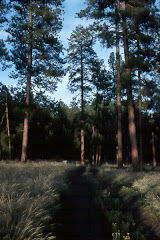
When my wife and I came to West Virginia, there were almost no ticks. I want to be precise about that, because the claim sounds like nostalgia and it isn’t. Our home sits at two thousand feet, in the Appalachian hardwoods that hold the lower and middle slopes before the northern hardwoods and, higher still, the red spruce take over — a hollow that kept its own weather. In those first years a walk in the woods ended without the small ritual of the body-check that every Appalachian household now performs by instinct. The ticks were few. Then they were not.
She is a veterinarian; I spent a career reading landscapes for the federal government. Between us we are two trained observers running our own assays on the same ground, and we registered the change well before the maps did. The deer carried it. The mice carried it. The winters stopped killing what they used to kill. By the time the surveillance literature and the county risk maps caught up, the woods had already told us, years earlier, in a language that didn’t wait for a five-year study to ratify it. Long before Kris Newby’s Bitten: The Secret History of Lyme Disease and Biological Weapons gave the unease a literature to argue over, something was amiss, and we knew it the way you know weather is turning — not from a bulletin but from the air.
I open with the ticks because they are the smallest true version of a problem I watched a room full of Nobel laureates and academy presidents circle all day, and never quite name. The problem is not discovery. The problem is time — the gap between how fast a thing can change and how fast we can establish whether the change is true, safe, or wise.
❧
This week I followed Revolutions in Science: Discovery, Imagination, and the Future — the National Academy of Sciences and Smithsonian's symposium marking the nation's 250th year. I watched remotely, and even at a screen's distance it was as good as a day of talks gets.
Mokyr’s argument is that the Industrial Revolution’s deepest cause was not coal or empire but a fall in what he calls access costs — the price of finding out what is already known. The eighteenth century built the machinery of cheap knowledge: encyclopedias, scientific societies, shared notation, the postal correspondence of the Republic of Letters. But cheap access was not enough on its own. What made the gains irreversible — what kept the West from losing its inventions the way China and Antiquity had lost theirs — was a fourth thing Mokyr names almost in passing. He calls it tightness: the degree to which a piece of knowledge is held by consensus, with confidence. Tightness is trust, quantified. It is what lets a person act on a fact they did not personally verify, because the network of people who did verify it can be relied upon.
Hold that word. The entire day turned on it.
Because if you list what is getting cheaper right now, it is exactly Mokyr’s first three access costs. Does the knowledge exist; who holds it; what does it cost to acquire — artificial intelligence is driving all three toward zero. What it is not obviously making cheaper is the fourth. Verification. Synthetic text, fluent and wrong. Citations that point to nothing. A flood of plausible surfaces with no consensus underneath. We are running Mokyr’s engine faster than ever on three of its four cylinders while the fourth — the one that made the whole thing hold — sputters. Acquisition gets cheaper as verification gets harder. That is not progress in reverse, exactly. But it is not simply progress, either.
❧
The panels, without meaning to, staged the question from every side.
Frances Arnold offered one answer to it, though she didn’t frame it as an answer. Directed evolution doesn’t ask the machine to understand the protein. It breeds variants and lets the assay decide — the enzyme catalyzes the reaction or it does not. The bench adjudicates. That is a kind of tightness you cannot fake, because nature is the referee and nature does not hallucinate. It is Bacon’s old instinct, the one Mokyr traces to the seventeenth century: ask first which techniques work, and only later why. When verification is hard, the assay is a way back to solid ground.
But an assay tells you a thing works. It does not tell you whether it should exist. That is the seam Langer sits astride, whether or not he said so from the chair. Drug delivery is a domain where the bench is brutal and honest — the formulation heals or it kills — and also a domain that cannot move a step without the slow machinery of trials, review, the FDA. He needs both at once: the fast assay that says works, and the slow institution that asks should. The same is true on the panel where Edward Chang described AI-scaled models of neurobehavior, correlated now to genetics. Powerful prediction. Real clinical good. And Ellie Pavlick, one chair over, spends her career on precisely the question that shadows it: when a model predicts beautifully, does it understand, or has it found a convincing surface? Carla Shatz, moderating, has spent hers showing how a brain wires itself through activity against a world that pushes back. The cortex earns its reliability by contact with consequence. It is fair to ask what a system trained without that contact has earned.
I am not reporting alarm. The day was, mostly, wonder — and it should have been. But across every panel the same shape kept surfacing: discovery has gone supersonic, and the apparatus that establishes whether a discovery can be trusted still moves at the pace of a convened committee. Two clocks. A widening gap between them.

❧
Then Fineberg, in the closing keynote, named it.
His closing slides did, in the academy’s own vocabulary, what I had been turning over in mine. He listed the day’s tensions, and two of the seven were these: the speed of technology against the pace of institutions and trust; the urgency of the moment against the long-term nature of science. There it was, from the closing keynote — the gap between the two clocks, set down as a defining tension of the age rather than a footnote to it.
And he offered the thing that holds the seam. He called it corrigibility — the shared structure of science and democracy. Both build in mechanisms for revision: replication, peer review, falsification on one side; amendment, election, judicial review on the other. Both rest on the premise that no single authority is infallible. Both treat dissent as a feature, not a flaw. Corrigibility is what tightness looks like when you watch it work over time. It is not a wall against error. It is a machine for correcting error faster than error accumulates.
Which is exactly why one number on his slides should stop us. Public confidence in scientists fell from 87 percent in April 2020 to 77 percent in January 2026. That is the erosion, measured. And his fifth and final commitment was the one that matters most for what comes next: earn trust — by science understanding the public first, not lecturing but learning. Stand in the seam. Honour the tension rather than rushing to close it.
❧

North and South America as they would appear from space, 35,000 km (22,000 miles) above Earth — the “Blue Marble,” Western Hemisphere. A true-color composite combining MODIS land-surface data from NASA’s Terra satellite (collected over 16 days) with cloud data from NOAA’s GOES satellite. Image created by Reto Stöckli, Nazmi El Saleous, and Marit Jentoft-Nilsen, NASA/Goddard Space Flight Center. Public domain. Even our truest image of the one planet is a composite — trustworthy because its making is documented, and it travels with its papers.
So here is where the woods come back, because they teach the rest.
For most of what is accelerating, the answer is not regulation in the heavy sense — it is something more like a governor, in Watt’s mechanical meaning: a coupling that lets a system sense its own speed and hold itself stable. Most discovery is reversible-and-fast. There, the work is to let curiosity run and require that claims travel with their provenance — who verified this, against what, with what confidence — so the network can adjudicate at the speed claims now move. That is tightness as something built in, not bolted on. My wife’s caseload, the birder’s field notes, the naturalist’s eye registering a changed forest: that distributed signal ought to feed the system at the speed it is generated, not wait years for a study to confirm what the ground already says.
But some change is not reversible. A released capability, a self-replicating construct, an edited germline — these do not decelerate when you cut the fuel. For that narrow class, the governor is not enough; there the slow committee is not a bug but the safety feature, and the honest word is gate. The hard, unglamorous work — the work I spent a career doing inside a federal agency, deciding which calls could be distributed and which had to be held — is drawing the line between the two. Most of the current argument fails because it reaches for one instrument and applies it to both.
The ticks are the lived proof of the first failure: a governor uncoupled, a signal that ran ahead of the institutions meant to register it. And they point, without my having to litigate who did what, toward the second: the class of risk where reversibility fails and a gate is not optional. Lived signal first, declared principle second. The woods earned the argument.
Fineberg ended on a single word. Who stands to gain from science? — Humanity. And then the condition, which is the whole point: if we preserve openness, encourage generosity, strengthen institutions, renew our commitment, and never cease to wonder. Strengthen institutions. He said it last because it is load-bearing. The Enlightenment did not just build the engine of discovery. It built the steering wheels — the corrigible institutions that kept the engine from running into the trees. We are very good, just now, at the throttle. The question the day left open, the one the woods have been asking us for years, is whether we will keep the brakes in working order while we accelerate.
It was Marcia McNutt who opened the day, in her role as president of the National Academy of Sciences, and it is worth ending on her — because the abstraction “strengthen institutions” only means something when you can put a life to it. I have followed her work since her years leading the U.S. Geological Survey, and what I have watched across that span is a particular and increasingly rare thing: a serious scientist who chose the harder vocation of public service and stayed in it. She has steered the Academy through tough and shifting weather, the kind that tests whether an institution is a building or a commitment. Institutions do not strengthen themselves. They are held — through changing times and changing winds — by people who decided the holding was worth a career. That is the work the woods cannot do for us, and it is the work this anniversary should honor most.
❧
Tapadh leat to everyone who built that remarkable day — and to the reader who has stood in a seam long enough to know it is a country of its own.
A note on how this was made
This essay is a collaboration. The standing is Sam Lammie’s — a career spent reading landscapes for the U.S. Forest Service, and a life lived at two thousand feet in the West Virginia hardwoods, where the ticks and the weather and the woods do their own teaching. The argument, the lived material, and the final judgment are his.
Claude (Anthropic) was the thinking partner across a long day and a longer night: drawing out the structure of the day’s symposium, pressing on the weak joints of the argument, drafting and redrafting prose, and making the figures. The “Three Velocities” diagram has a third hand in its lineage — its three-curve decomposition began in a graphic generated by ChatGPT (OpenAI), which Claude redrew in this blog’s own visual register, stripping the false precision and restoring the honest caveat that the shape, not the numbers, is the claim. The header image is NASA’s public-domain “Blue Marble,” credited above.
It takes a village to think clearly now — human standing, machine help, and the discipline to say plainly which is which. A piece about verification and provenance should carry its own. This one does: Sam’s hand, Claude’s, an openly credited assist from a third tool, and a NASA composite that wears its making on its sleeve. Where this work used a machine, it says so.
— Sam Lammie & Claude, The Musical Stone, 2026