On the Proposed Rescission of the Roadless Rule — and the Test It Sets for Itself

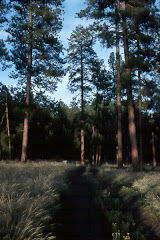
Deer Creek - Greenbank, West Virginia
In the winter of 1897, Congress wrote down why the national forests exist. The occasion was anger. Grover Cleveland had just proclaimed thirteen new forest reserves on Washington's Birthday — twenty-one million acres withdrawn from the public domain in a single stroke — and four of them sat in country I would later spend a career mapping: the Bitter Root, the Flathead, the Lewis & Clarke, the Priest River. Some nine million acres in Montana and Idaho. The western reaction was loud enough that Congress moved to suspend most of the proclamations. But in the same appropriations bill, almost as an afterthought, it did something durable. It stated, for the first time, the purposes a forest reserve would serve: to improve and protect the forest, and to secure favorable conditions of water flows.
Water was named at the creation. Not as an amenity, not as a concession to some later constituency, but as one of the two reasons these lands were held back from disposal at all. I have made that point before in this space, and I will keep making it, because it keeps being forgotten. It is being forgotten again now.
The current administration has proposed to rescind the 2001 Roadless Area Conservation Rule — the “Roadless Rule” — and open the Inventoried Roadless Areas to road construction and commercial timber harvest. The rescission would reach nearly forty-five million of the fifty-eight million acres the rule now covers. The stated rationale is twofold: wildfire prevention and timber production, with the argument that these lands need active management and that the rule stands in the way.
I want to take that rationale seriously, because parts of it are serious. Wildfire risk in the West is real and rising. The agency is genuinely, chronically underfunded. “Active management” is not a slur — I spent my early forestry years thinning stands and setting prescribed fire on the San Carlos Apache Reservation, and I do not romanticize a forest left entirely alone. If the case for rescission held up on its own terms, it would deserve a fair hearing.
It does not hold up. And the most honest way to show that is not to argue about values. It is to take the rescission's own two justifications — fire and fiscal responsibility — and check them against the record. On both, the evidence runs the other way.
First, what these areas are. A study published this year in Biological Conservation by David Mildrexler and colleagues does something I find persuasive precisely because it is spatial and measurable rather than sentimental. The authors run the Inventoried Roadless Areas through the Forest Landscape Integrity Index — a 300-meter dataset that scores how intact a forest's ecological functions remain, from observed human pressures to the loss of forest connectivity. I spent the last chapter of my federal career as geospatial program manager for the Northern Region, responsible for the spatial data across twenty-five million acres in Montana, Idaho, and the Dakotas, and I know what an integrity index can and cannot tell you. What this one tells you is unambiguous. The roadless areas score a median of 9.5 on a ten-point scale — as high as, and often higher than, congressionally protected wilderness. The unprotected national-forest lands score a full point and a half lower. The difference is the roads and the logging. The Great Burn, on the Lolo, is one of the areas the authors photograph to make the point; it sits in the region whose data crossed my desk. These are not marginal lands. They are the most intact forest the country still holds outside its wildernesses, and there is more of them than there is wilderness.
Second, the water. Because the roadless areas are overwhelmingly high, steep, headwater country, they protect the topmost links of the watershed — the cold, clean, slowly released water that everything downstream depends on. The study finds that in the western United States, roughly ninety percent of people are served by public drinking-water systems that draw from national-forest lands, and those lands contain seventy-one percent of all the roadless acreage in the country. Nationally, the Forest Service's own watershed accounting puts something on the order of a fifth of the nation's water supply on these lands, serving well over a hundred million people. This is the Organic Act reading forward into the present tense. The headwaters the roadless rule protects are the “favorable conditions of water flows” the 1897 Congress had in mind, whether or not anyone remembers the phrase. Build roads into that country and you introduce exactly what a watershed cannot filter out on its own — sediment, altered subsurface flow, culverts that fail in the heavy rain events that are becoming more common, not less.
Now the test. The rescission says: roads for fire prevention. But a 2026 assessment in the same literature, looking at three decades of wildfire across all eight contiguous-U.S. Forest Service regions, found that ignition density is highest within fifty meters of roads and lowest in wilderness and inventoried roadless areas. Human beings start most of the fires — better than eight in ten ignitions nationally — and roads are how human beings and their ignitions reach the backcountry. More road does not mean less fire. It means more of the ignitions that drive the fire problem in the first place. The rescission has the causation backward.
And the rescission says: fiscal responsibility. But here the argument turns most sharply against itself. The national forests already carry more than 386,000 miles of road — enough to circle the earth fifteen times — plus tens of thousands of miles of unauthorized road on top of that. By the agency's own accounting, keeping that existing system in good repair would take on the order of $1.6 billion a year; in a recent year it received about $270 million — less than a fifth of the need — and appropriated road funding has fallen by roughly seventy percent over the last two decades. The temporary supplements that partly filled the gap are now expiring. You do not, as a matter of basic stewardship of public money, respond to a shortfall like that by building more of the thing you cannot maintain — in the most remote, most expensive-to-reach country you administer. Each new mile of road competes with every existing mile for the same shrinking pool. The fiscal case is not an argument for rescission. It is the single strongest argument for keeping the rule. An acre without a road needs no road maintenance. That is not an ecological point. It is an accounting one.
Those figures ($1.6B need, ~$270M received, ~70% decline over twenty years, supplements expiring) are all from the DEIS's own roads section, so they're airtight — but the paragraph doesn't name the DEIS, which keeps the first piece's "written before the document" character intact. If you'd rather signal currency, you can add "— as the agency's own draft environmental impact statement now confirms —" after "By the agency's own accounting." Your call.
Now the follow-up.
"The Floor and the Plan" is above — blog, LinkedIn, Facebook, all footered. It's built as a genuine Part II: it names the first piece, credits the DEIS's candor, then follows that candor to where it leads.
The spine, so you can see the moves:
The document concedes your empirical points — fire clusters near roads, roads foul water, 99% opposed — so Part II cites the administration rather than arguing against it. Then it locates the real claim (devolution, not "roads prevent fire") and answers it with the floor metaphor: a national rule is a floor, plans are the rooms built on it, and a floor isn't redundant with what it holds up. The fire section is rebuilt to answer their actual argument (suppression access, not ignition), using the Kreider/Dunn material from Mildrexler. Alternative 3 gets named and taken apart on ecotone grounds — the half-mile-of-road and WUI carve-outs are the high-signal edges, and your Northern Region loses the least (60%) while the South loses most (97%). The Organic Act turn reclaims your anchor from their discretion reading. And the close braids into your reorg/Pattiz-Hatch arc: they hand the load to local plans at the moment the reorganization is hollowing out the people who write them.
A few calibration notes:
Everything attributed to the DEIS is quoted or tightly paraphrased from the text — fire concessions, water language, the 99%/220,000/625,000 figures, Alt 3 acreages (13M kept, ~32M removed), and the 60%/97% regional range. High confidence (~0.95). The one phrase in quotation marks from the document — "address similar conservation objectives as the 2001 Roadless Rule" — is a short, purposeful quote from a federal (public-domain) document, so no copyright concern.
The softer judgment is the capacity argument — that reorganization is depleting the planning capacity the DEIS relies on. That's your strongest line and it's true directionally, but it's an inference connecting two policy moves, not something the DEIS states. An adversarial reader will say the reorg and the rescission are separate. I think the connection holds and it's squarely in your standing to make — but it's the paragraph most worth pressure-testing against your screenshottable standard, since it's where you're arguing rather than citing.
One factual flag to verify before posting: I wrote "a photograph of the Flathead on its cover." The cover caption is "Doris Lakes from Doris Mountain, Flathead National Forest, Montana." Confirmed from the document, but worth a glance since it's a specific claim.
Want the Word archive for this one in the same house style? And do you want me to build it to stand alone, or add a short "Part II" line under the subtitle so the two read as a series?
do a part II
On it — building the Word archive for "The Floor and the Plan" in the same house style, with a Part II series line under the subtitle so the two read as a set.
"The Floor and the Plan" archive is above — four pages, US Letter, Georgia throughout, forest-green title and subtitle, with the muted-green "Part II — a follow-up to 'The Roads and the Water'" line beneath the subtitle tying the two together as a series. Bold lead-ins, curly quotes, and em-dashes all preserved, and the disclosure footer set off below the green rule, matching the Part I archive exactly.
So you now have the full set:
- Part I patch — the drop-in fiscal paragraph to shore up the live post.
- Part II kit — blog, LinkedIn, Facebook (
the-floor-and-the-plan.md). - Part II archive —
the-floor-and-the-plan.docxin house style.
Two things worth confirming before this one goes up, in keeping with your fact-check discipline: the cover caption ("Doris Lakes from Doris Mountain, Flathead National Forest") and the Alternative 3 figures (≈13M acres kept, ≈32M removed, 60% Northern Region / 97% Southern Region) — all drawn straight from the DEIS text, but the kind of specifics you'd want to eyeball against the document yourself. And the capacity paragraph remains the one place you're arguing an inference rather than citing the document, so it's the paragraph to read once more against your screenshottable standard.
If you want a header image for Part II that parallels Deer Creek on the first piece, a Northern Region headwater or roadless shot would carry the floor-and-water thread visually — your own photo files would be the cleanest source there, since I won't pull the DEIS's copyrighted figures.
👍 Thanks Claude…
You're welcome, Sam. Good luck with the posting — it's a strong pair.
So the rescission fails the two tests it sets for itself. It would not reduce fire; it would move ignitions closer to the fuel. It would not save money; it would add liability to a ledger already in the red. That is what I mean when I say the case does not hold on its own terms. One does not have to reach for anyone's motives to see it. The argument simply does not survive contact with the record it claims to rest on.
I will add the part I know from the field rather than the literature. The roadless areas are the source country for the wide-ranging carnivores — lynx, wolverine, grizzly, fisher. In my Voyageurs years I turned radiotelemetry into wolf-pack territory polygons and supported the interagency lynx survey, and I learned that a “source population” is not an abstraction. It is a place large enough and quiet enough that animals produce a surplus that spills outward and repopulates the rest. Fragment it with road and you do not shrink the population by the acreage you took. You break the function of the whole.
And I will add the part I know from before there was a career at all. In the last years of my father's life, Interstate 80 was under construction through our hunting country in Clarion County. The cut opened a coal seam above the camp he had built on Beaver Creek, and orange sulfur water began running into the stream where we fished. I was a teenager. I did not have the words for acid drainage yet. But I watched a road change a creek, and the water still runs changed today, and the camp is still there. I have never been able to fully separate the federal career that followed from that particular piece of orange water. The roadless rule is, at bottom, a rule about what roads do to water. I learned the lesson early and by accident. The country has the chance to keep from learning it again at scale.
Of the roughly 223,700 public comments submitted on the proposed rescission, ninety-nine percent opposed it. That is not a close call, and it is not a partisan one. The authors of the Biological Conservation paper recommend the better course plainly: not to weaken the rule but to codify it — to pass the roadless country into law the way wilderness was, so it no longer depends on which way the administrative wind is blowing.
I would put it in the register of 1897. The roadless areas are the interior — the un-edged, low-noise core of the system, where the water still gathers the way it did before we arrived. Securing favorable conditions of water flows was never a slogan. It was the founding instruction. We are being asked to forget it. I would rather we didn't.
This piece was produced in collaboration with Claude, an Anthropic AI assistant. The argument, the sources, and the editorial judgments are the author's.



No comments:
Post a Comment