A Lawman’s Reckoning
The Musical Stone | Sam Lammie & Claude
-----

I have spent most of my adult life in federal service — the Peace Corps in Guatemala, the Bureau of Indian Affairs, the National Park Service, the U.S. Forest Service across nearly three decades, the last years of my career overseeing geospatial work across twenty-five million acres of the Northern Region. I have believed, and continue to believe, in the covenant that public service represents that we hold something in trust, that the law applies to everyone, that stewardship is a moral act.
I am not, by temperament, a man who judges quickly. I have watched colleagues make decisions I disagreed with. I have sat with complexity long enough to know that righteous certainty is often its own form of blindness. My faith — Catholic, shaped by covenant and by the long arc of scripture — counsels patience, humility, and the careful examination of one’s own motives before turning a critical eye outward.
But there comes a time.
-----
The Name and What It Carries
My family name, Lammie, derives from the Old Norse lagmaðr — the law-man, or
law-speaker. In Norse and early Scottish tradition, this was not a warrior’s
role. It was the role of the person charged with knowing the law, remembering
it, and speaking it clearly — especially when power preferred silence. The
law-speaker did not wield force. He bore witness. He named what was.
I thought about this when my family and I visited, years ago now, Salisbury
Cathedral and the Magna Carta. Eight hundred years of parchment. The barons at
Runnymede in 1215 were not idealists. They were men of power who had watched a
king operate as though the law did not apply to him. They drew a line. They
said: no one stands above this covenant. Not even you.
King Charles, in his address before a joint session of Congress on April 28 —
two days ago, the first British monarch to do so in thirty-five years — invoked
the Magna Carta directly. He told that chamber that the document is cited in at
least 160 Supreme Court cases, “not least as the foundation of the principle
that executive power is subject to checks and balances.” He spoke of the stone
at Runnymede, an acre of that ancient ground given by the British people to the
United States, and closed the passage with words that landed in that divided
hall like a covenant reminder: “It is here in these very halls that this spirit
of liberty and the promise of America’s Founders is present in every session
and every vote cast. Not by the will of one, but by the deliberation of many.”
A reigning monarch. That chamber. Two days ago. It resonates.
-----

The Halls of Salisbury Cathedral
-----
What the Record Shows
I want to be precise here, because precision is what the lawman tradition
demands. I am not trafficking in rumor or partisan heat. I am reading the
record.
The Forest Service, the agency I gave the better part of my professional
life to, has lost more than five thousand employees since January of this year.
The proposed FY2026 budget eliminates forest and rangeland research entirely —
eight hundred scientists gone — while mandating increased timber harvest.
Former Forest Service chiefs, six of them, have asked publicly whether this is
a cynical effort to hollow the agency out so that public lands can be
transferred to private interests. The people being fired are precisely the people
needed to do the work the administration claims it wants done.
USAID no longer exists as an independent agency. It has been absorbed
into the State Department, its staff dispersed, its programs — many of them
lifesaving — terminated. I served as a Peace Corps volunteer in Guatemala from
1977 to 1979. I know what American development assistance looks like from the
ground. I know what its absence looks like too. Projections now suggest the
cuts could result in millions of preventable deaths by 2030. Catholic Relief
Services. Mercy Corps. Save the Children. All gutted.
The National Science Board — the independent body established by
Congress in 1950 to oversee the National Science Foundation — was fired in its
entirety four days ago. Twenty-four members. No explanation. No warning. A
terse email: terminated, effective immediately. The agency has already lost
forty percent of its staff. The proposed budget cuts NSF funding by more than
half. This is the systematic dismantling of the scientific advisory
infrastructure of the United States government.
The Boundary Waters — America’s most visited wilderness, familiar to
many readers — now faces sulfide-ore copper mining upstream in its watershed
after the Senate voted to overturn a twenty-year moratorium. Forest Service
studies concluded the risk of permanent contamination is severe. The mine’s
beneficiary is a subsidiary of a Chilean conglomerate. The path to reversal has
been legally foreclosed by the mechanism used to overturn the ban.
The family of the sitting president has conducted eight overseas real
estate deals since January 2025 — compared to zero during the first term —
while taking ownership stakes in a drone company seeking Pentagon contracts,
and receiving a half-billion dollar investment from a UAE government-linked
entity in the days before the inauguration, after which the administration
reversed a restriction on advanced chip exports to the UAE. The president’s net
worth has increased sixty percent since returning to office.
A federal jury found the sitting president civilly liable for sexual
abuse and defamation. The verdict has survived every appeal. The judge
clarified that the jury’s finding was consistent with rape under New York’s
legal definition. This is not allegation. This is adjudicated civil liability.
And then there is Jeffrey Epstein — the convicted sex trafficker whose
friendship with the president is thoroughly documented across two decades,
whose files, released under congressional mandate the president initially
opposed, mention the president’s name more than a thousand times and document
repeated flights together that the president had publicly denied.
-----
The Magna Carta Moment
I am not calling for anything other than clear sight and honest speech.
The barons at Runnymede did not assassinate a king. They assembled, named what
had been violated, and insisted on a covenant that the powerful could not
simply discard because it was inconvenient. That is the tradition I was raised
in — by name, by faith, by vocation.
So I am speaking.
The record I have outlined above is not a political document. It is a
stewardship document. It is a covenant document. It describes, in verifiable
and documented terms, what has been broken — what we were promised as citizens,
as inheritors of Runnymede and of the long tradition of democratic
accountability, and what has been taken.
I spent thirty years managing public land on behalf of the American people. I
stood in the mountain forests across this country and understood, in a
visceral way, that I was holding something in trust — not for this
administration or the next, but for the children of people not yet born. That
is what stewardship means. That is what public service means at its best.
There comes a time when the law-speaker must speak the law, even when power
prefers silence.
That time, by the evidence before us, is now.
-----
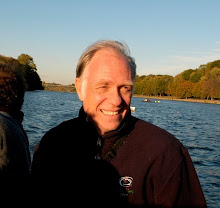
Sam
Lammie, GISP, is a retired U.S. Forest Service Geospatial Program Manager,
returned Peace Corps volunteer, and holder of a graduate certificate in
Managing Artificial Intelligence Systems from Carnegie Mellon University. He
writes The Musical Stone from Montrose, West Virginia, and Victor, Montana.
This
post was composed in conversation with Claude (Anthropic), continuing a
collaborative practice of civic witness.


No comments:
Post a Comment